Mick Cooke on foxtrots, the Blitz and a very expensive bowl of fruit.
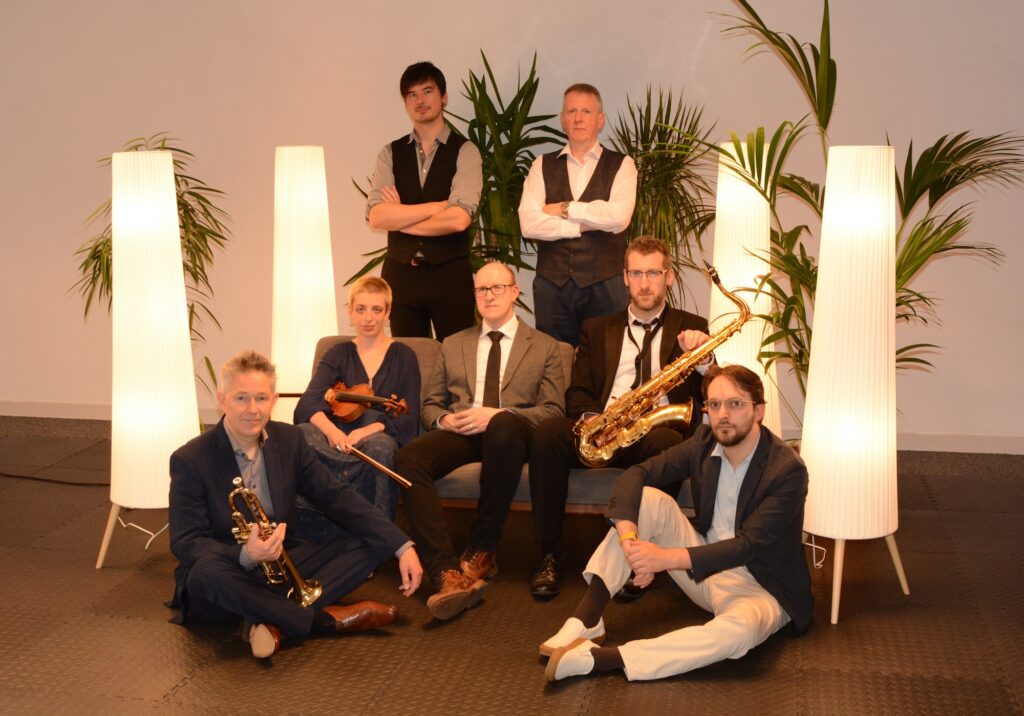
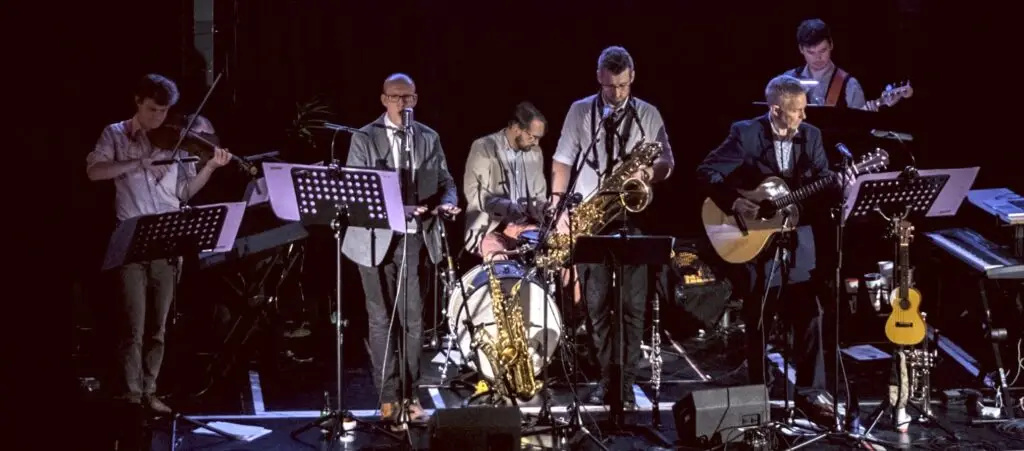
Once in a while we put a spotlight on someone in our community who is doing amazing things. This time it’s the Blue Cat Orchestra, a new seven-piece band from Glasgow bringing back the lost sound of Britain’s 1930s dance halls.
I caught up with Mick (founder member of Belle & Sebastian and BAFTA-winning TV composer) and Gill, who manages the band, ahead of their first headline gig at Drygate on 12 November.
What is a 1930s dance band?
Between the late 20s and late 30s, British dance bands mixed violins with saxophones, trumpets, tubas and even piccolos. Mick describes it as “a cross between music hall songs and jazz”. The bands were the rock stars of their day, playing the Savoy, touring the country and broadcasting on the BBC every night until midnight.
Then the war broke the bands up, swing arrived with the American GIs, and most of the music was forgotten.
“Even though this music is almost 100 years old, it feels like it’s brand new, in that so few people are familiar with it,” says Mick.
Dancing through the Blitz
When war broke out, nobody stopped dancing. People were told to stay indoors, but as Mick puts it, “people just wanted to go out dancing”. Venues blacked out their windows and the bands played on.
It came at a real cost. In March 1941 a bomb hit the Café de Paris in London. Ken ‘Snakehips’ Johnson, who led the club’s house band, the West Indian Dance Orchestra, was killed just as the band struck up.
One of the songs in the Blue Cat Orchestra’s set is Irving Berlin’s anti-Hitler number When That Man Is Dead And Gone, recorded by Al Bowlly.
“Al Bowlly was the most successful singer in Britain in the Thirties,” says Mick. “He actually recorded this song just weeks before he was killed in the Blitz.”
How the band came together
Mick fell for the sound after finding a compilation CD in a German record shop in the early 2000s. The band itself started with a pub chat after a big band gig, when he found out saxophonist Dave was a fan too.
The hardest part was finding a jazz violinist in Scotland. They found two. Fronting it all is Anthony Bowers, an actor and big band singer who tells the stories behind each song between numbers. The band ranges from people in their twenties up to sixty.
“That’s what’s great about music – it brings people together in a way that nothing else does.”
About those kumquats
Ask Mick and Gill what’s surprised them most about starting a band. After learning Instagram from scratch, the answer is how hard it is to find kumquats.
The band rehearses in a studio on the ninth floor of a 70s office block, with views right across the city. At the first rehearsal everyone turned up with the usual crisps, beer and biscuits. Anthony, who was on a health kick, said he’d rather have melon and kumquats. So at the next rehearsal a platter of melon and bowls of kumquats were waiting for him. As the band put it, “It’s like the last days of Rome really.”
If you’ve never had one, a kumquat is a tiny oval orange, slightly bigger than a grape. You eat the whole thing, skin and all. They don’t come cheap either – Mick has seen them sold for £19 a kilo.
The taste is the best bit. It starts sweet, turns bitter, then goes sweet again, and the faces people pull are half the fun. The band is now thinking about a ‘Blue Cat kumquat challenge’ on Instagram, filming first-timers trying one. Keep an eye out.
What to expect on the night
Drygate will be set up cabaret style, with tables, chairs and plenty of room to dance – quicksteps, foxtrots and a bit of Lindy Hop. Or just sit back with a drink and enjoy it. Expect a guess-the-tune competition and a reveal at the end of the night that we won’t spoil here.
“There’s this misconception that 1930s music is all tea dances,” says Mick. “But a lot of it is basically party music.”
Get your tickets
The Blue Cat Orchestra plays Drygate, Glasgow on Thursday 12 November. Tickets can be found on Forumm here.
Thanks to Mick and Gill for chatting with us. We’ll see you on the dance floor.